Return to home
Midora AI: Designing the platform where AI models work together.
AI users were switching between multiple tools, losing context, and paying for overlapping subscriptions. Midora was designed as one workspace that brings AI tasks, writing tools, history, and smart model routing into a single experience.
Team structure & overview
I worked closely with the Ops and Engineering leads to ensure the hybrid cart logic was technically feasible within our existing 3PL framework.
My role
Product Designer
Team
Product:
2 PMs along with Product Lead
Design:
Me (Product Designer)
Engineering:
2 Mobile Engineers, 2 QA, and 6 Software Engineers
Scope. 8 Weeks
User research, Competitive audit, Platform flows, Prototyping, User testing, Handsoff
Context
Users were not struggling because AI tools were weak. They were struggling because every tool lived in a different place, with separate histories, separate pricing, and no shared context.
The challenge was to understand whether users would trust and pay for a unified AI workspace, and then translate that insight into a usable product experience.
Research & Insights
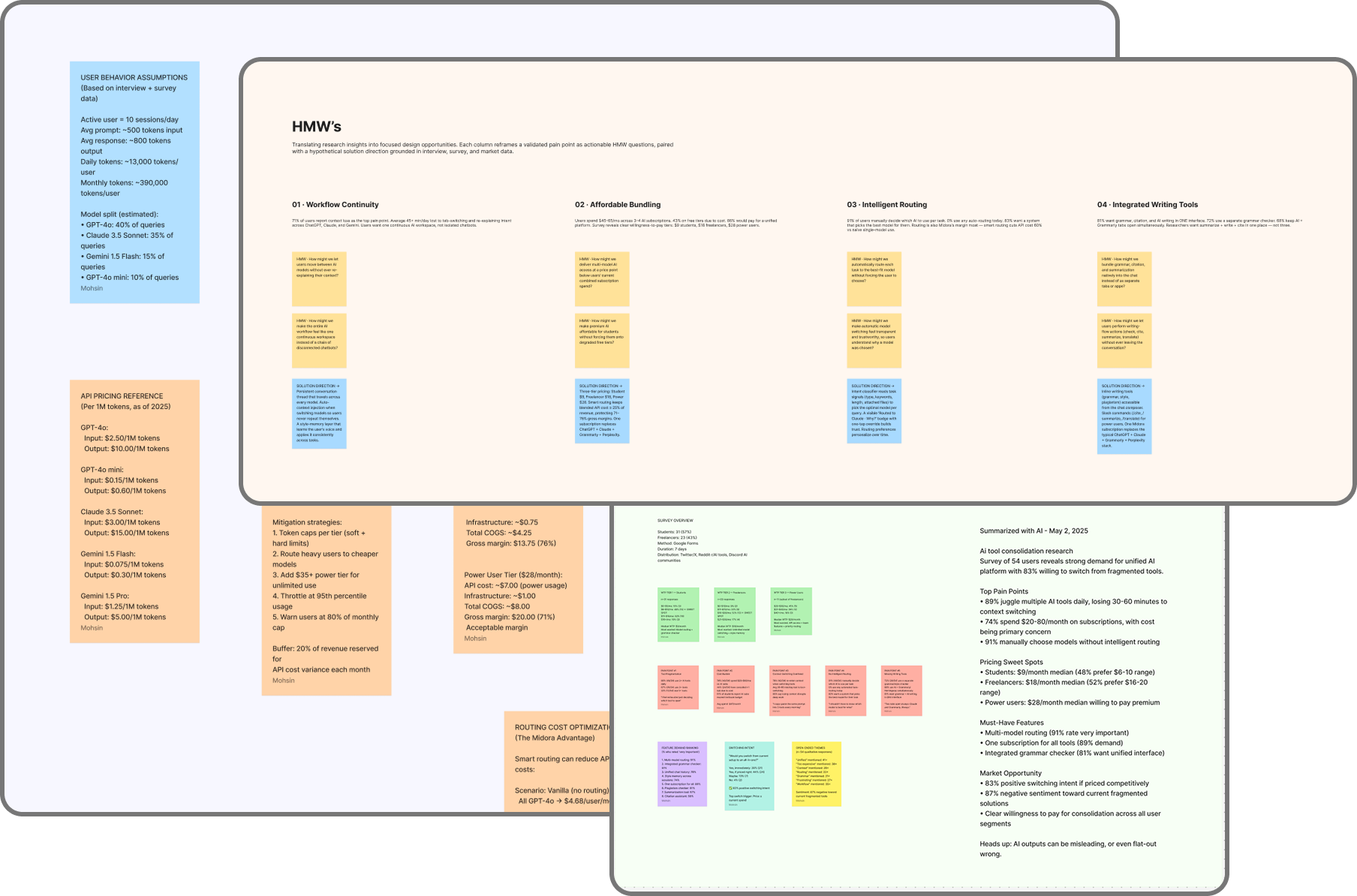
Users were not looking for another AI tool. They were looking for one place to manage the work they were already doing across multiple tools.
Interviews revealed repeated friction around tool switching, context loss, and subscription fatigue, Shaping Midora into a unified AI workspace with smart model routing.
Solution & Outcome
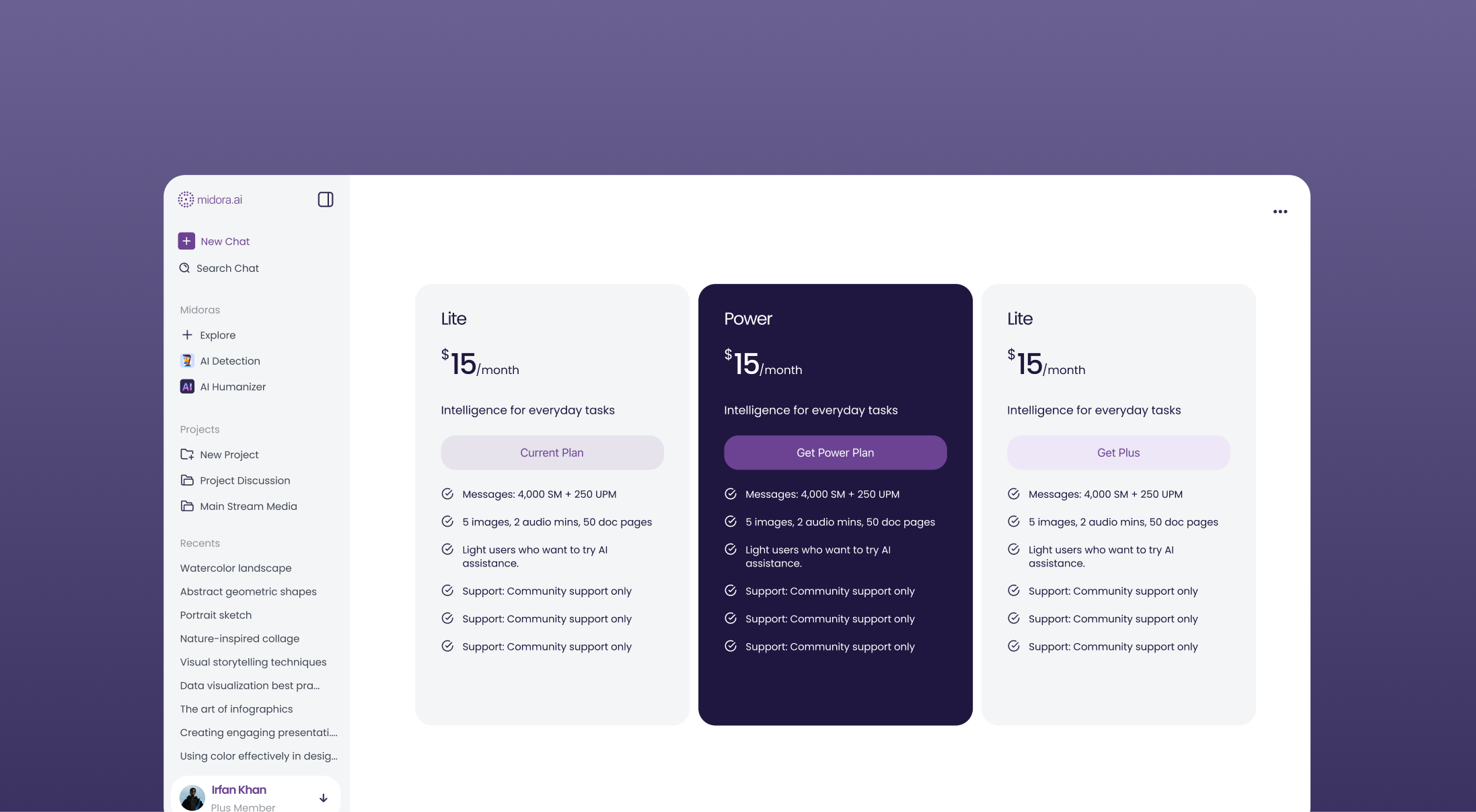
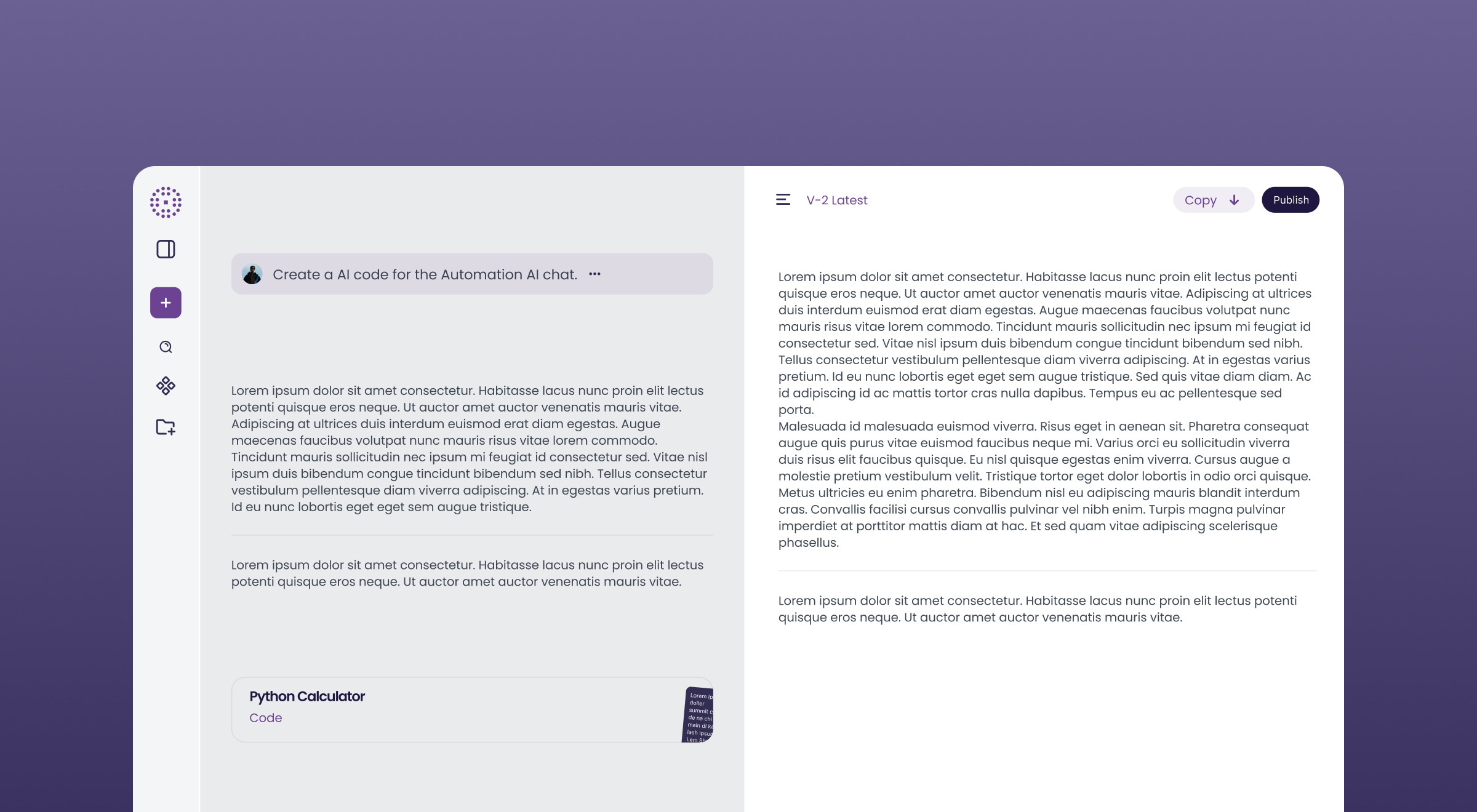
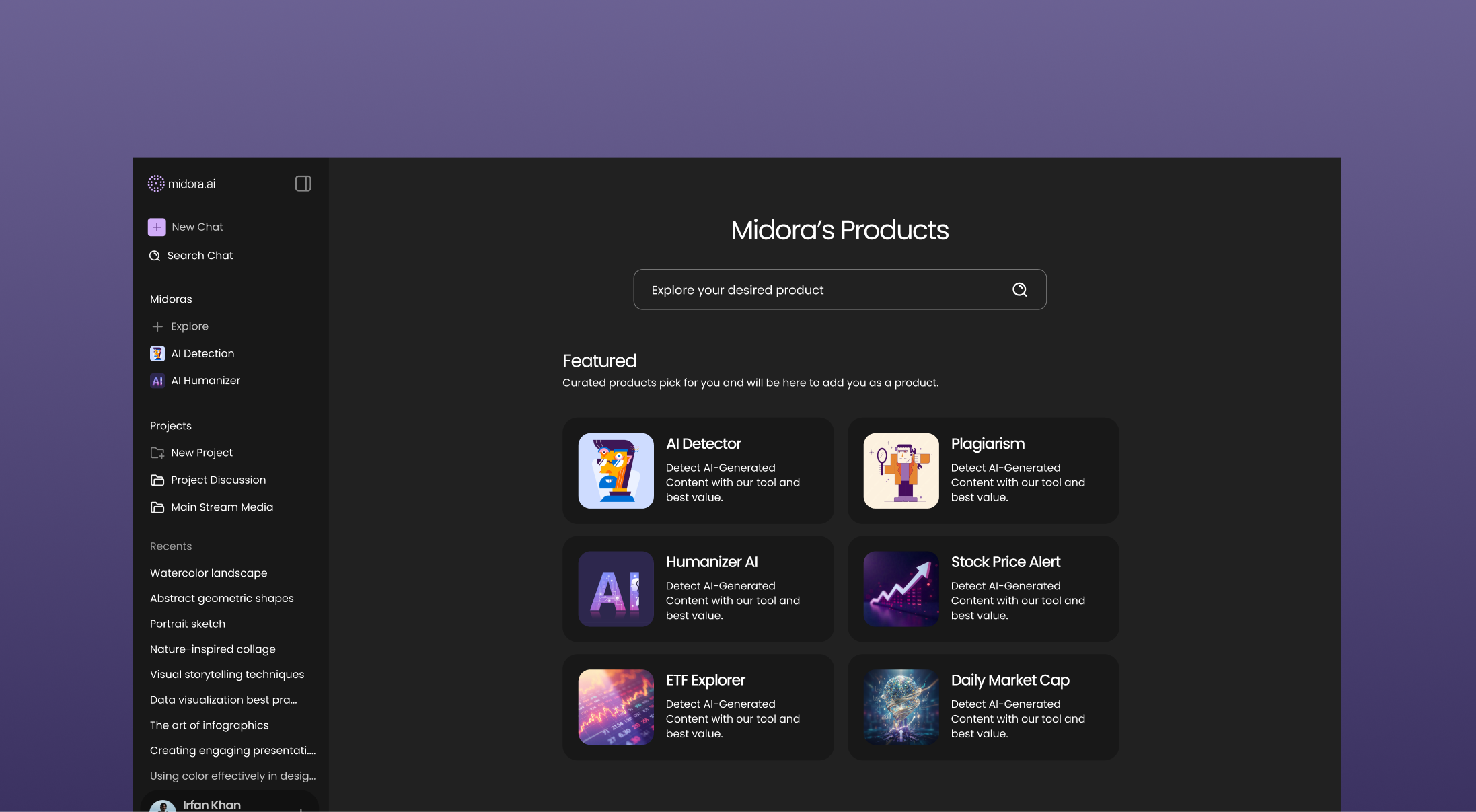
I translated the research into product flows, prototypes, and the full customer and admin experience. Midora brought smart model selection, unified chat history, writing assistance, summarization, citation support, image prompting, subscriptions, and admin controls into one workspace.
The direction validated a clear product opportunity: users were willing to pay for a simpler AI workflow that reduced tool switching, kept context together, and replaced multiple subscriptions with one focused platform.
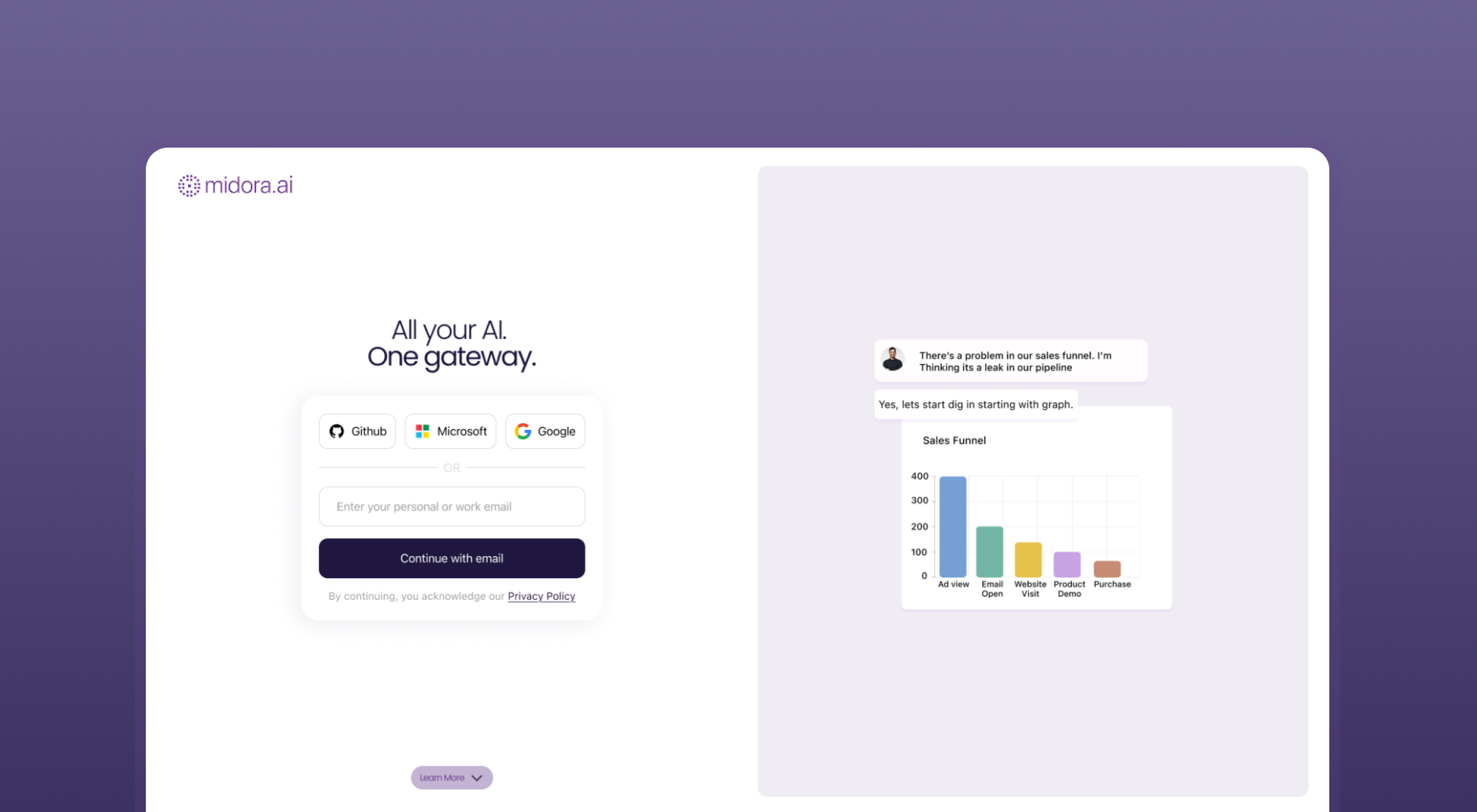
Landing page
Midora Products
Admin