Return to home
DealCart: Evolving Product for Managed Marketplace Growth
Evolving a grocery app into a multi-vertical ecosystem for Fashion, Electronics, and Beauty. I created the modular UI framework and service logic to drive a 21.2% increase in AOV.
- Product Strategy
- UX Research
- Design System
- Interaction design

Team structure & overview
I worked closely with the Ops and Engineering leads to ensure the hybrid cart logic was technically feasible within our existing 3PL framework.
My role
Senior Product Designer II
Team
Product:
2 PMs focusing on marketplace strategy and category expansion.
Design:
Me (Senior Product Designer), Product Designer, and our Design Manager.
Operations:
1 Ops Lead and 1 Team Member to define 3PL and vendor logistics.
Engineering:
1 Mobile Lead and 2 Software Engineers to build the modular architecture.
Scope. 8 Weeks
Product Strategy . User Research . Prototyping . Design System . Handoff
Context
DealCart was winning in grocery, but the margins were thin. To hit profitability, we had to move into lifestyle categories without breaking the "quick-shop" experience our users loved. The challenge wasn't just adding tabs; it was figuring out how to sell a smartphone and a carton of milk in the same journey.
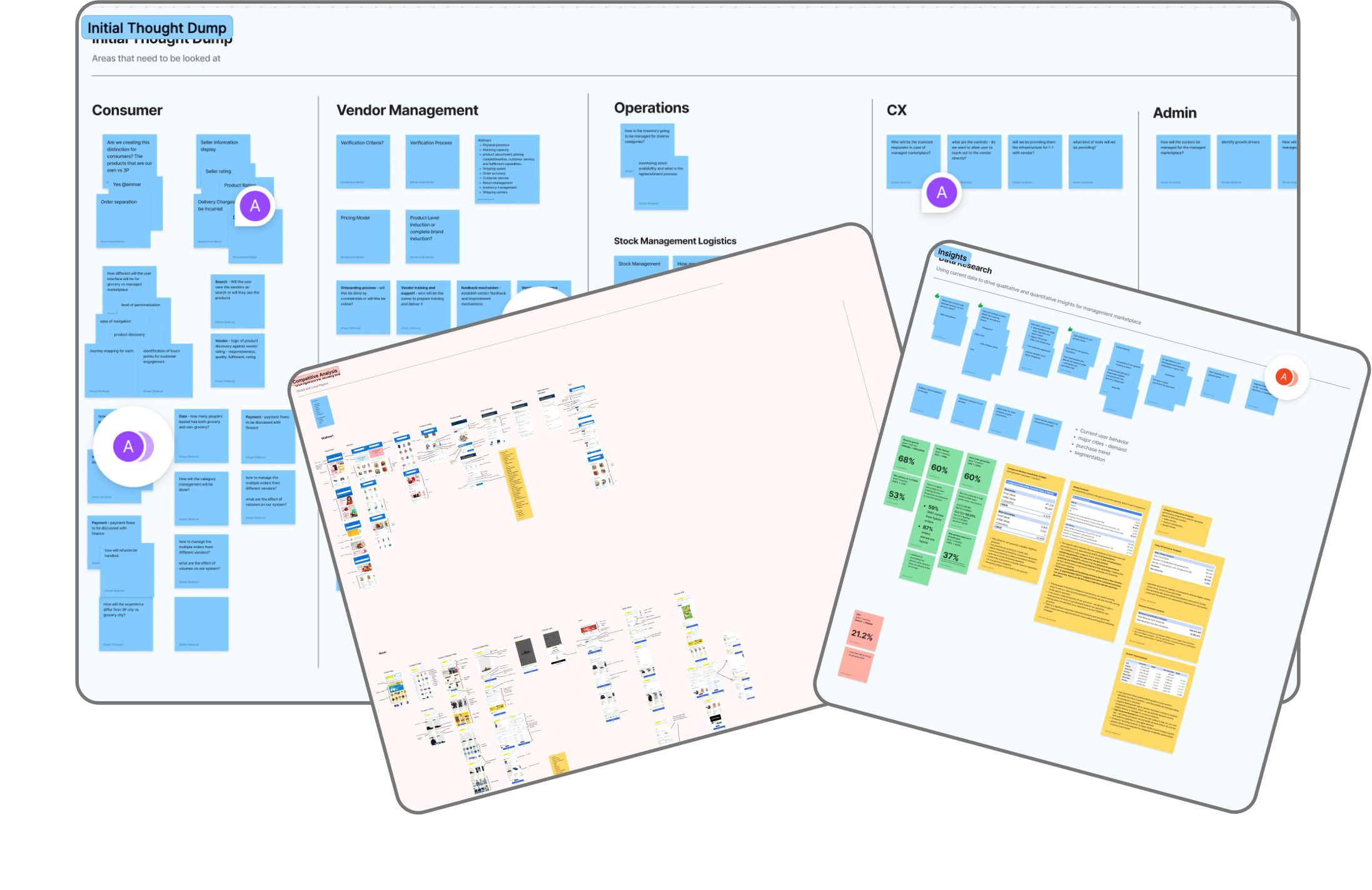
Market validation & insights
I audited global giants like Noon and Walmart and analyzed 4,000+ user data points to justify the pivot.
65.5% of users were ready to buy lifestyle categories immediately.
88.2% of power users were Gen-Z/Millennials—the ideal demographic for Tech and Fashion.
21.2% projected increase in Average Order Value (AOV) by shifting the mix to high-margin SKUs.
The system
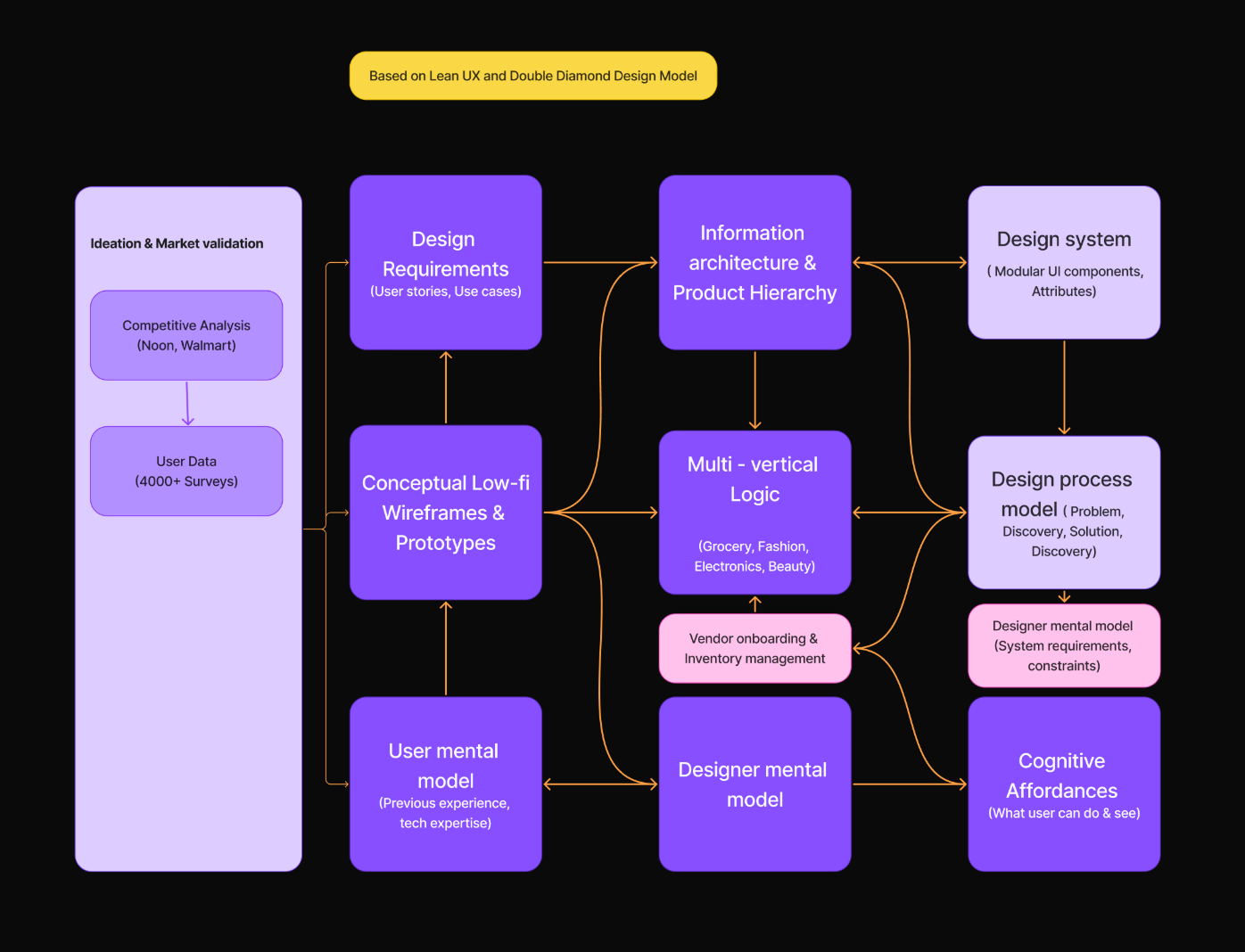
I developed a Design Ontology based on Lean UX and the Double Diamond model. This wasn't just a UI update; it was a total re-engineering of the product’s DNA.
Solution and impact
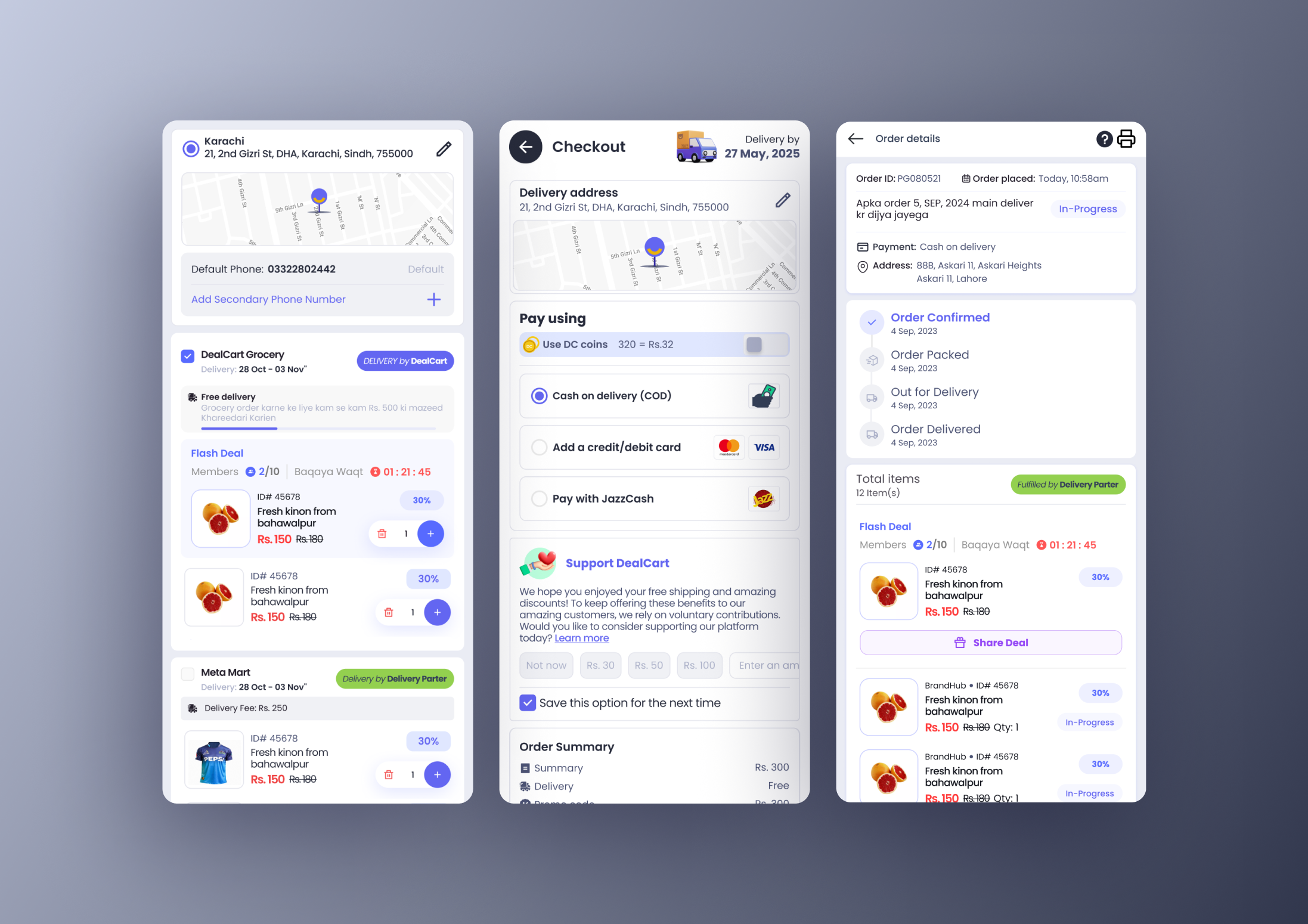
I transformed DealCart from a grocery utility into a modular multi-vertical ecosystem, architecting an adaptive UI and hybrid checkout logic to bridge the gap between rapid delivery and marketplace logistics.
This strategic pivot redefined the company’s unit economics—driving a 68% revenue expansion and a 21.2% increase in AOV, while establishing a scalable blueprint that reduced new category launch times from months to days.
The Hybrid Cart: Orchestrating Multi-Origin Logistics
PDP & reviews
Next case study
GGMS: Simplifying Complex Real Estate CRM Workflows