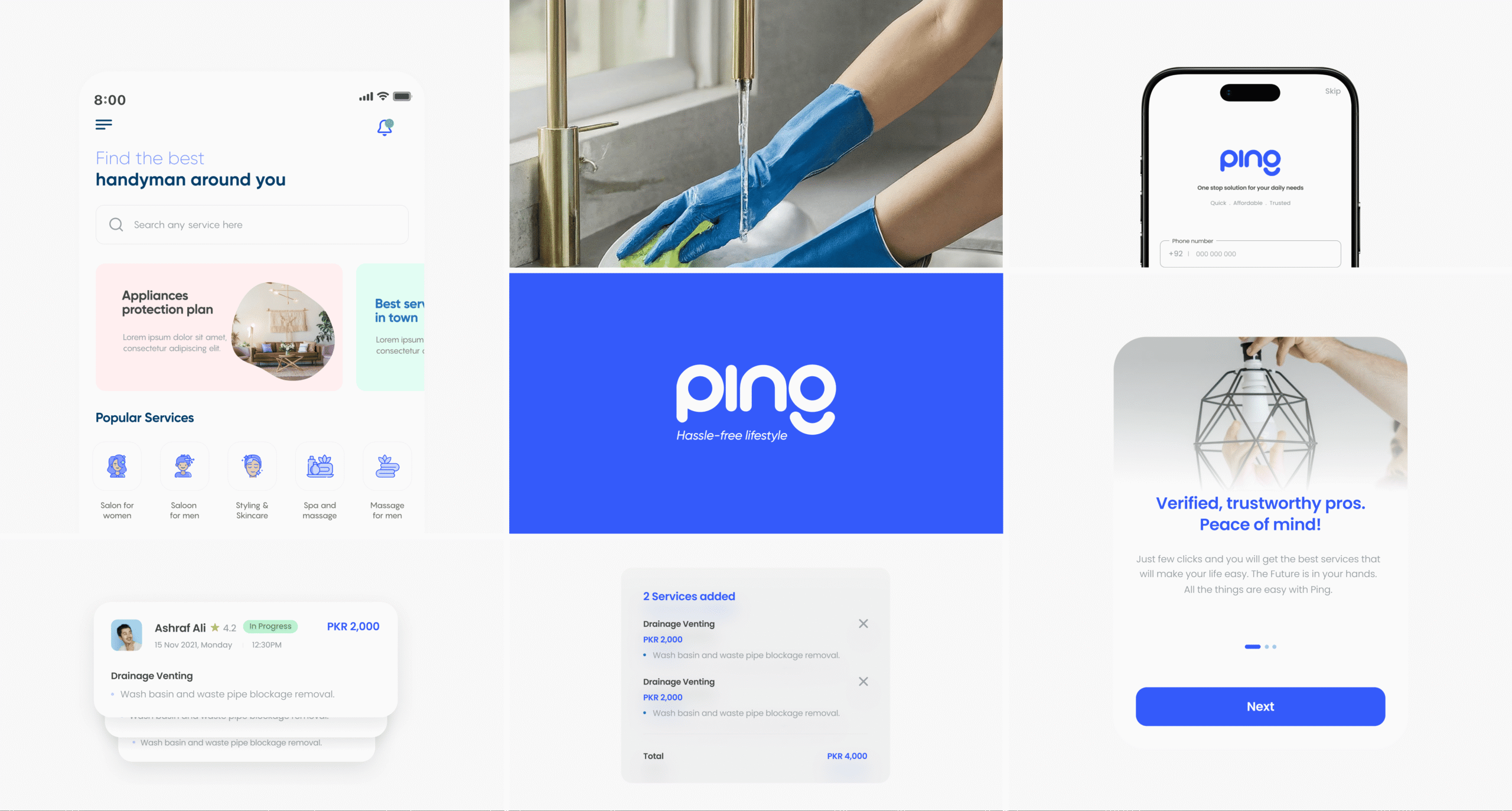
Reducing risk at the moment
of booking local services.
My role:
UX Strategy • Two sided home services market place Experience Design • User Validation • Devs Handsoff
Deep diving into the problem users facing
Finding a service provider is easy. Getting the job
done smoothly is not.
Consumers invite someone into their homes with limited information, unclear pricing, and little accountability if things go wrong. Missed appointments, vague service scopes, and inconsistent provider quality make the experience feel risky rather than convenient.
On the other side, skilled service providers struggle to find consistent, relevant work. Requests are often unqualified, poorly defined, or outside their expertise, leading to wasted effort and low confidence in the platform.
Insights That Shaped the Product
Discovery across both customers and service providers
revealed that most failures didn’t happen during search,
they happened after intent was expressed.
For customers
uncertainty appeared when service scope, pricing, and timing were loosely defined. Even when providers were available, vague requests and unclear expectations led to hesitation, cancellations, or repeated follow-ups outside the platform.
For service providers
demand existed but lacked structure. Requests were often mismatched to skills, poorly specified, or non-committal, making it difficult to prioritize work or rely on the platform as a steady source of income.
Across both sides, the same pattern emerged:
“when expectations weren’t aligned upfront,
effort increased
but outcomes declined.”
These insights shifted focus away from maximizing requests and toward designing clearer commitments
before a
booking was confirmed.
Experience Principles
To translate insight into a reliable service experience, we
aligned on a small set of principles that guided product
decisions across both sides of the marketplace.
The user problems i discovered
Bookings should only happen once scope, pricing,
and timing are clear to both parties.
Reduce negotiation, increase clarity.
The product should remove the need for back-and-forth
by making expectations explicit upfront.
Design for completion, not requests.
Success is measured by completed services, not the
number of inquiries created.
Respect provider expertise and availability.
Requests should align with skills and capacity, so
providers can accept work with confidence.
Keep coordination inside the product.
Critical communication and updates should happen
within the platform, not shift to external channels.
Experience strategy
The experience was structured to move users from intent
to commitment with as little ambiguity as possible.
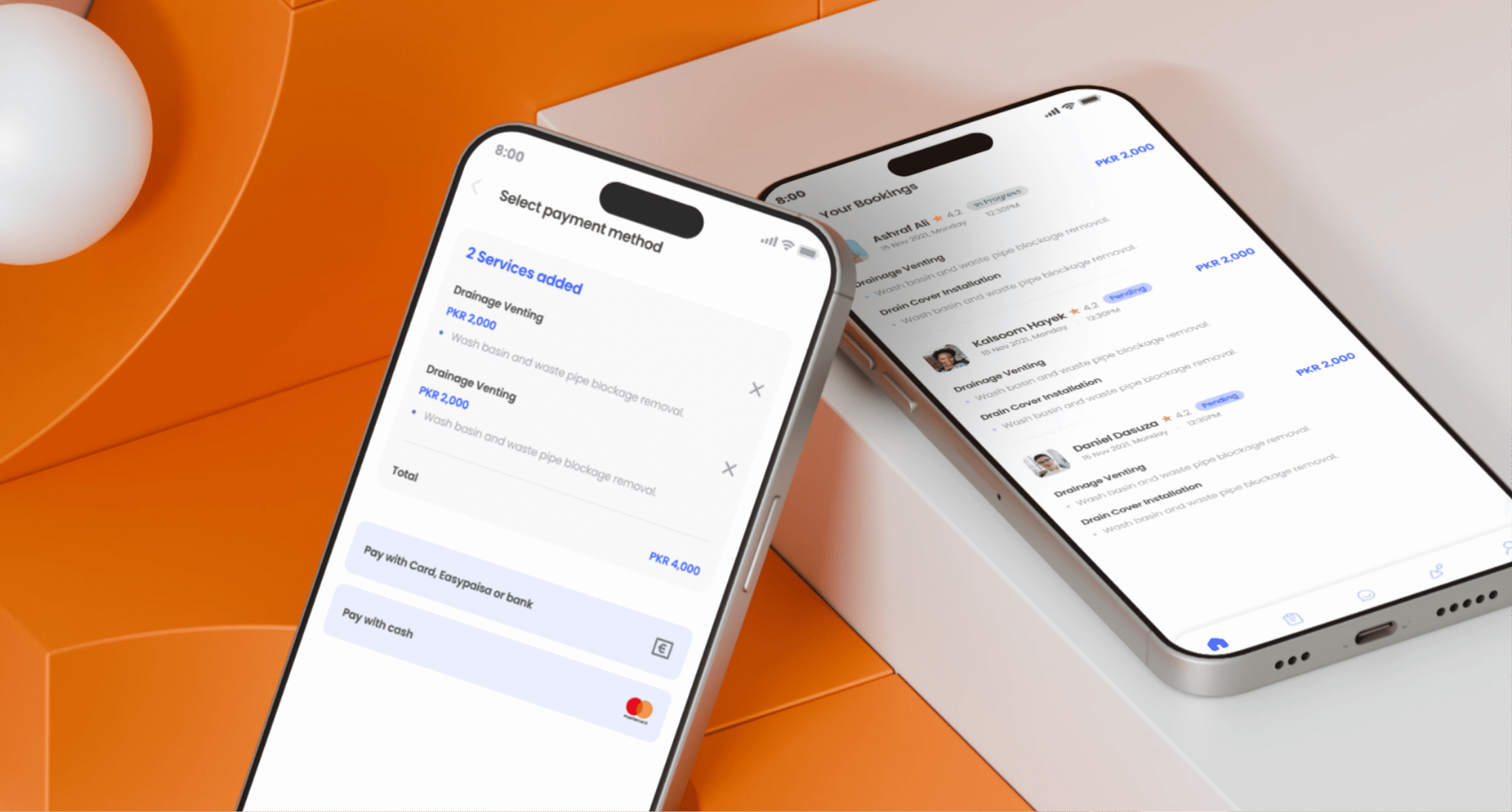
Instead of allowing open-ended requests, the journey guided customers through defining service type, scope, pricing, and timing before a booking could be confirmed. This reduced negotiation and ensured that requests reaching service providers were clear and actionable.
For service providers, the experience emphasized predictability. Requests were structured around declared skills and availability, allowing providers to accept work confidently rather than filtering mismatched inquiries.
Across both sides, the same pattern emerged:
Define → Align → Confirm → Complete
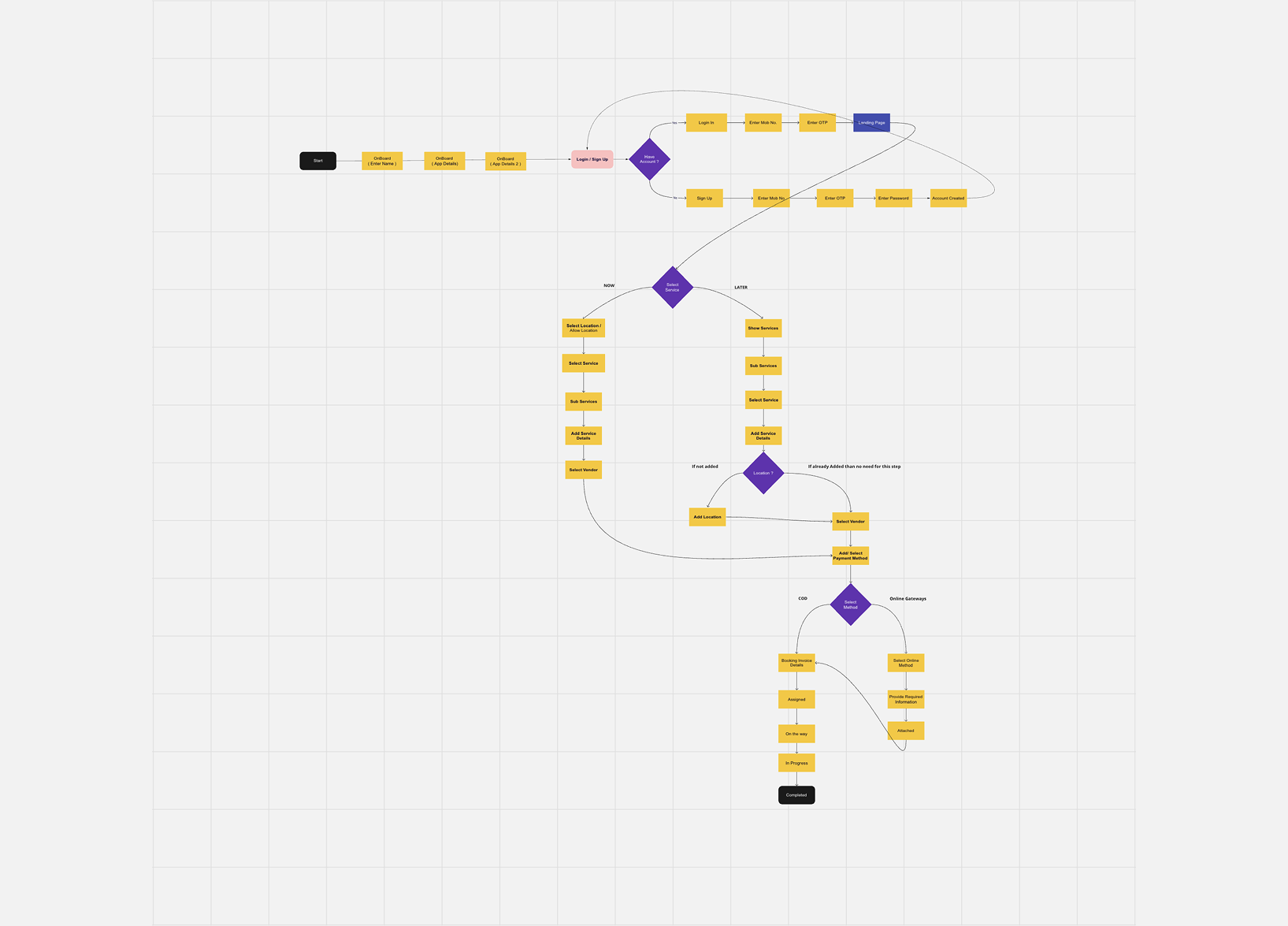
Booking Flow Overview
The journey was designed to reduce decision fatigue
and remove negotiation early.
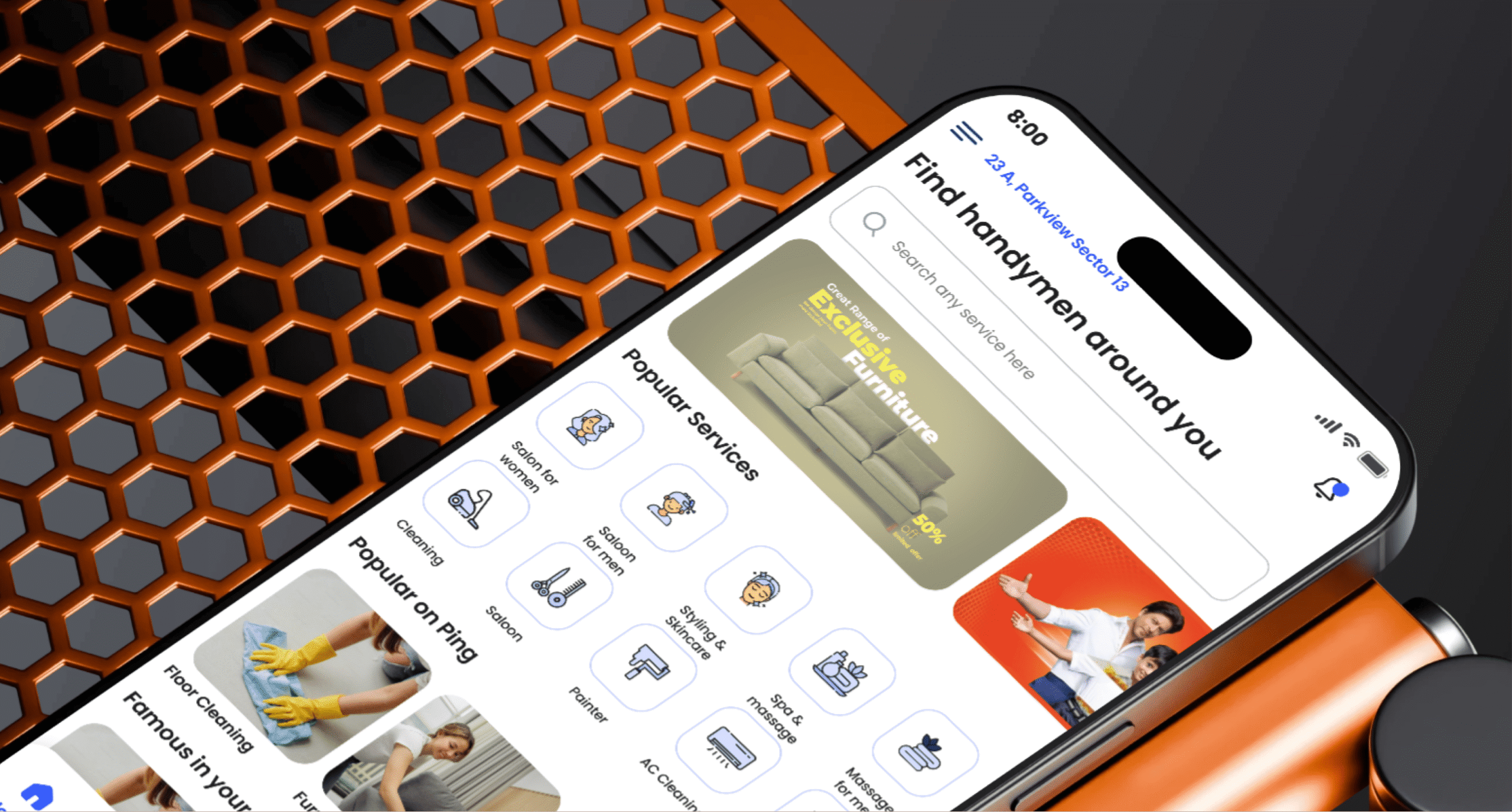
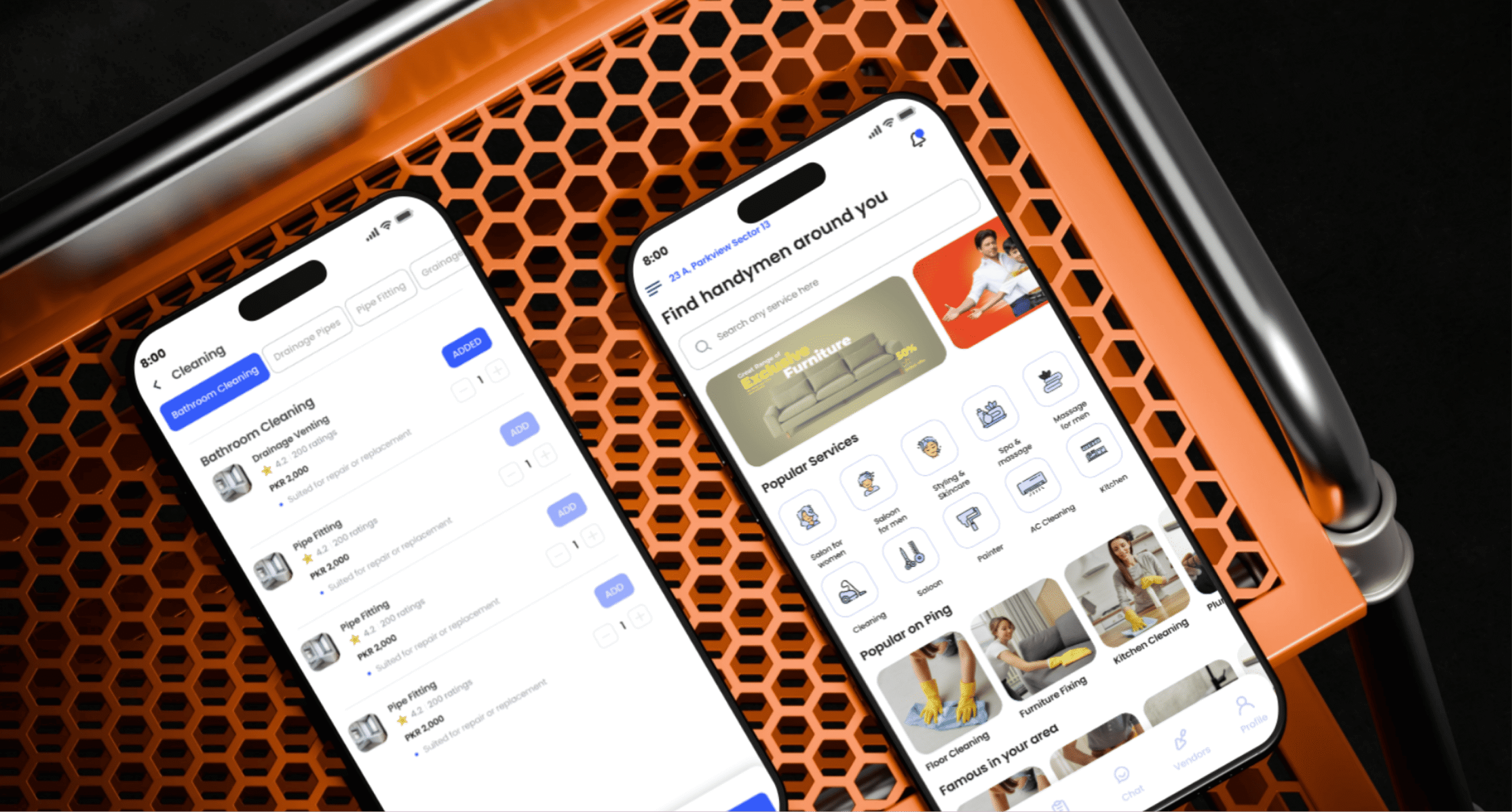
Users landed on a service-first entry point, where commonly requested services and nearby availability were immediately visible. This allowed users to orient themselves quickly without needing to search or guess what was possible.
Once a service was selected, users were taken to a focused detail view to define the exact scope through clear sub-categories.
Booking confirmation flow
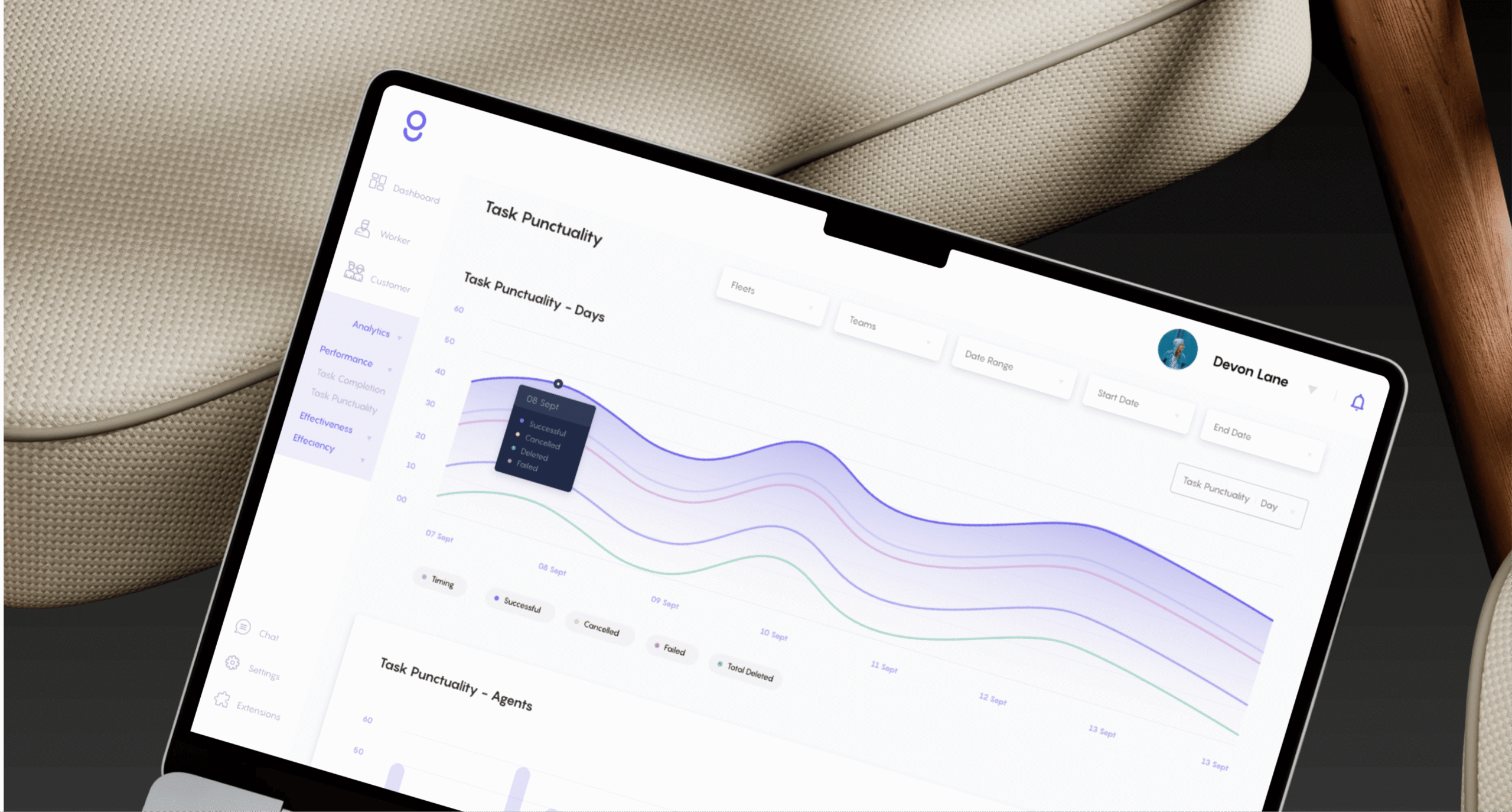
CRM for internal Ping team
Outcomes & Business Impact
By structuring the booking journey around
clarity and commitment, Ping shifted behavior
on both sides of the marketplace..
By restructuring service bookings around clarity and commitment, Ping delivered measurable business outcomes
Booking completion rates increased
by 25 - 30%
Booking completion rates increased by 20 - 30%,
driven by explicit service scope and upfront
regional pricing.
Cancellations and failed bookings
decreased by 18%
Cancellations and failed bookings decreased
by 18%, as users and providers aligned on
expectations before confirmation.
Provider efficiency improved
Provider efficiency improved, with higher acceptance
to completion ratios and fewer mismatched requests.